
This is an old revision of the document!
Easy Access Herbs For Covid
This is a brief summary on the aid these beautiful herbs can provide in relation to support against covid. More information will follow on the herbs individual pages.
Garlic
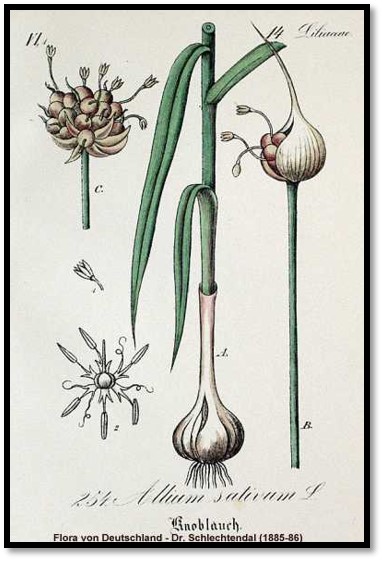 Garlic (Allium sativum)
Grows in NZ, plant cloves in winter no later than 21st June – Winter solstice.
Properties
Alterative, antibacterial, antibiotic, anti-inflammatory, antimicrobial, antioxidant, antiseptic, antispasmodic, antiviral, aphrodisiac, carminative, chologogue, diaphoretic, digestive, diuretic, expectorant, nervine, stomachic, tonic, vermifuge, vulnerary.
Supports liver function – Sulphur based chemicals – Glutathione and Methionine.
Supports heart
Thins blood
Kills parasites / worms
Treatment
Take at onset of infections. 4-6 Cloves per day (per adult) – Take separately with food to avoid stomach upset.
Caution
Avoid if breast feeding as will taint the taste of the milk.
Echinacea
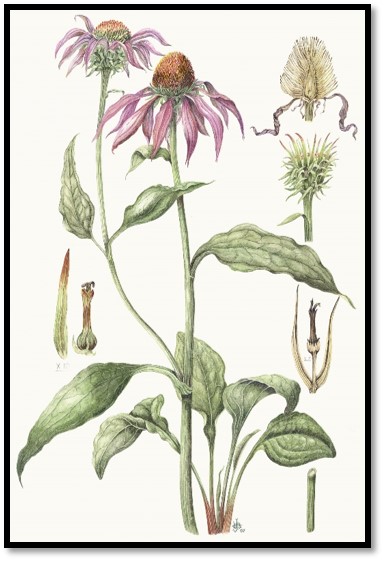 Echinacea (Echinacea purpurea)
Echinacea purpurea is a prairie plant from the USA that grows in New Zealand, although tricky as it needs stratifying. Often this can be purchased as a hybrid in Garden Centers.
Properties
Alterative, antibacterial, anti-inflammatory, antiseptic (GIT), antiseptic (respiratory tract), antiseptic (topically), antiseptic (urinary), antiviral (systemically), immunostimulant, lymphatic, sialogogue, vulnerary. Abscesses, allergies/sensitivities, autoimmune disease, boils, catarrh (respiratory), chemotherapy (minimise side effects of), common cold, furunculosis (inflammation of the spermatic cord), herpes simplex, immune deficiency, infections (viral and bacterial), inflammation (connective tissue), influenza, pharyngitis, post viral syndrome, septicaemia (mild), skin disorders, tonsillitis, wounds (internally and topically).
Caution
For those with tendency to allergic reactions Asteraceae family – minimal risk with root preparations. Don’t give to cats/caution with animals as increases salivation.
Treatment
A must in any house hold!!!
At onset of infection take one teaspoon of dried root, decocted in a cup water for 30 minutes. Drink 3 cups a day. Make bulk preparation of teapots worth.
Olive
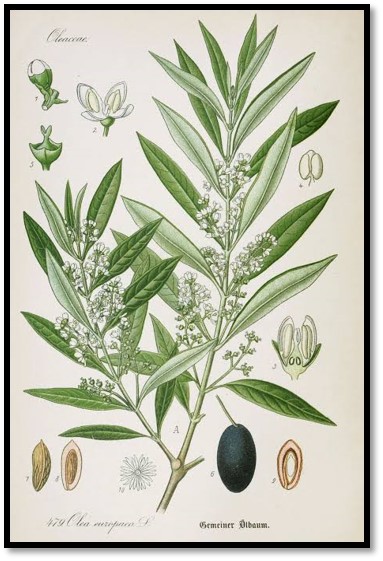 Olive (Olea Europaea)
Evergreen tree from the Mediterranean that is long leafed. Grows well in the North Island of New Zealand, particularly dry hot summers in coastal areas. Will grown on stony terrain
Olive (Olea Europaea)
Evergreen tree from the Mediterranean that is long leafed. Grows well in the North Island of New Zealand, particularly dry hot summers in coastal areas. Will grown on stony terrain
Tree 10m height, green leaves profuse, eliptic-lanceolate, sliver underside. Paneculate olive coloured flowers that turn into drupe fruits.
Properties
Antioxidant, bitter, tonic, hypotensive, antiseptic, antispasmodic, diuretic, hypocholestrolemic, ant-inflammatory, antiatherongenic, antithrombotic, immunostimulant, antimicrobial and antiviral.
Olive is commonly known as being a healthy food usually from the fruit, this mainly being due to the essential fatty acids, healthy oils that are extremely beneficial to the body. Olive is also known for having beneficial compunds that treat a whole range of issues (indicated above) these include treatment of the heart and cancer. 1)
Treatment
1 tspn dried / 2 tspn fresh per cup of boiling water, infused for at least 10 minutes. 3 times a day.
Turmeric
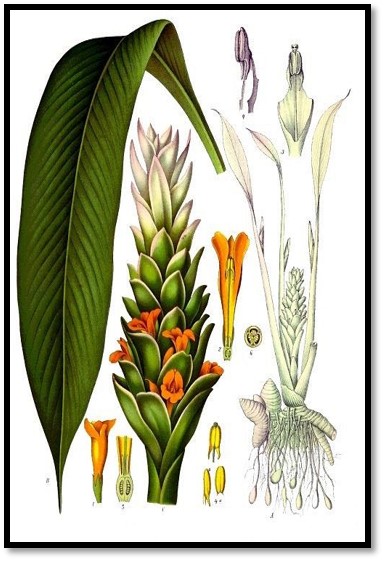 Turmeric (Curcuma longa)
Tumeric is a member of the ginger family (Zingiberaceae). It is a perennial and thrives and high temeratures and rainfall. Originally native to India and South Asia. It’s leaves and long and simple, tapering at the end. A 3 petalled yellow flowers are often found growing near the ground. The rhizome, which is the part frequently used in food and healing is a dark brown on the outside, yet brilliant yellow/orange within.
Properties
Anti-cancer, anti-inflammatory, anti-microbial, anti-oxidant, anti-platelet, anti-spasmodic, carminative, cholagogue, choleretic, depurative, hepatoprotective and hypolipidaemic. 2) External uses – vulnerary, anti-ulcer and anti-psoriatic.
Turmeric is an extremely beneficial spice that can be very helpful in rebalancing the body. I often encourage patients who have a digestive disorder to make their own Golden paste made from Turmeric, Black Pepper, Coconut oil and Water and use this at ¼ teaspoon three times a day. Golden paste recipe This simple home hack can save a small fortune supplement wise. Yes by all means go buy Curcumin supplements (active ingredient in Turmeric), however the recipe here provides the ingredients to get as much curcumin from your Turmeric at a fraction of the price. If you have green fingers, plant some Turmeric rhizomes, with the little nobbles on, these will grow to become beautiful plants.
Turmeric is known for being an anti-inflammatory, making it a powerful remedy to ease pain and discomfort, whether this be digestive, joint ache or inflammation in general. Turmeric also supports the liver, helping the body detoxify waste products, it also has antiparasitic properties, helping to removing parasites within the body. Turmeric supports the cardiac and nervous system.
Dandelion
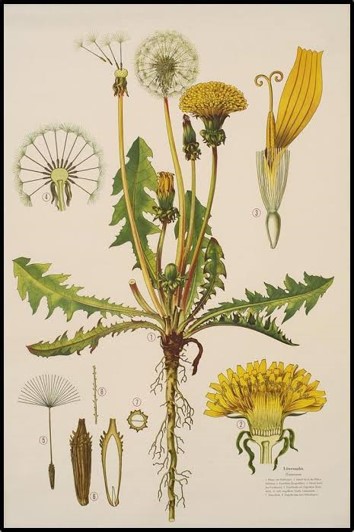 Dandelion (Taraxacum officinale)
Asteraceae family.
This herb literally grows all around the world. It is a perennial with a deep tap root and a floret of leaves oblanceolate to obovate, edged with jagged margins and a pinkish red stem at the lase of leaf. A single purplish stem produces a yellow corolla flower which becomes a white seed pappus, each seed having a orb-like head. It produces a milky latex.
Properties
Anti-rheumatic, choleretic, diuretic (laxative), bitter tonic.
Vilified in the Round up spray and walk away adverts, as target for gardeners to destroy. Yet is a nutrient dense plant, that supports the liver, gall bladder (roots) pancreas (flowers / leaves) and kidneys (leaves) cardiac by proxy, supporting digestion, and reducing bone pain. Leaves have been found to protect the body from Spike proteins.
Eat leaves as part of the daily diet or add to smoothies.
Dosage
Drink tea of leaves, flowers or roots. 1 tspn dried / 2 tspn fresh per cup of boiling water, infused for 10 minutes.
Selfheal
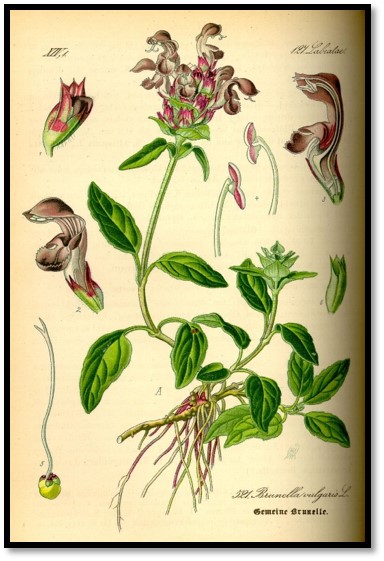 Selfheal (Prunella vulgaris)
Selfheal is a common garden weed, that has it’s origins in Eurasia but now grows worldwide. It is a temperate plant and likes growing in disturbed soils, you will often find it on roadsides, woodland edges, meadows and fields.
A member of the mint family. The plant will grow to approximately 50cm. Obvate to lanceolate leaves grow opposite one another and are approximately 5 cm long. Square stems support two lipped flowers, the upper being a darker shade of purple than the lower. The side stems easily self root when touching the soil.
Properties
Vulnerary, styptic, antiseptic, antispasmodic, astringent, antioxidant.
This common pretty weed that is often pulled out the garden has some special qualities. Research has found that one of the compounds of the plant protects the body against spike proteins.
Treatment
Make a tea from 2 teaspoons of fresh leafs or 1 teaspoon of dried in boiling water for 10 minutes.
Fennel
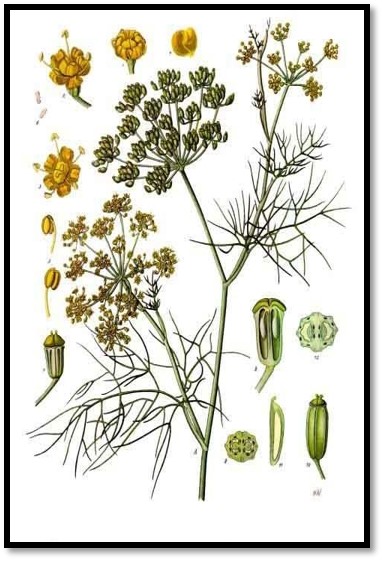 Fennel (Foeniculum vulgare)
Apiacea family.
Originally from Southern Europe and the Mediterranean. Grows 2m tall with a thick tap root, hollow cylindrical stems and feathery pinnate leaves. Golden umbels of flowers that are 1-2 cm long turn into the 3-6mm long ribbed seeds. Fennel grows all around the globe, often on undeveloped land in full sunshine.
Properties
Anti-inflammatory, antimicrobial, antispasmodic, carminative, diuretic, expectorant, galactagogue, oestrogen modulating, orexigenic and stomachic.
3)
Another common weed, often found growing on waste land. The seeds are rich in Shikimic acid, which is a protective component against covid.
Treatment
An easy way to extract this is to make a tea of the seeds. 1 teaspoon of seeds decocted in boiling water for approximately 20m (simmer in a saucepan and keep the lid on until it has cooled). Add ½ teaspoon to ½ teaspoon Star anise for a more anise flavoured, tea. Star anise has been linked with anti covid properties and removal of spike proteins.
Kawakawa
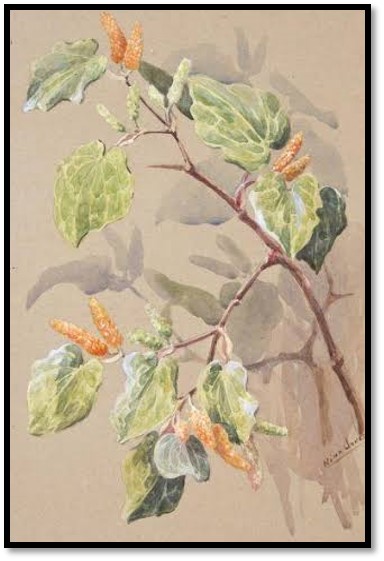 Kawakawa (Macropiper excelsum)
Piperaceae family.
Native plant of NZ, grows in the North Island and around Banks Peninsula South Island. Related Polynesian Kava. Kawakawa tends to grow on the outer edge of the bush and lowland forest. The tree grows upto 6m tall, with nodule joints. It has heart shaped leaves with prominent veins, these being glossy on top. Health plants are often devoured by the Kawakawa Loper moth, these are the best for medicine. This plant has both male and female trees, the male produce yellow flowers, the female produces the banana shaped fruit. The fruit and leaves are both aromatic and taste peppery.
Properties
Alterative, anaesthetic, analgesic, anticatarrhal, antidyspeptic, antifungal, anti-inflammatory, antimicrobial, antioxidant, antiseptic, antispasmodic, aromatic, bitter, blood cleanser, blood sugar regulator, bronchodilator, diaphoretic, warming digestive, diuretic, expectorant, hepatic, laxative, nervine, nutritive, tonic, vasodilator and vermifuge. 4)
Treatment
1 tspn dried / 2 tspn fresh, per cup of boiling water, infused for 10 minutes. 3 cups a day, no more than 10 days in a row, then 10 day break.
30 Leaves, steeped in 2.5L of boiling water, simmered for an hour, or until leaves dissolve, keeping the lid on. Allow liquid to cool,, strain and bottle (dark liquid). Drink ½ a cup twice a day.
Coriander
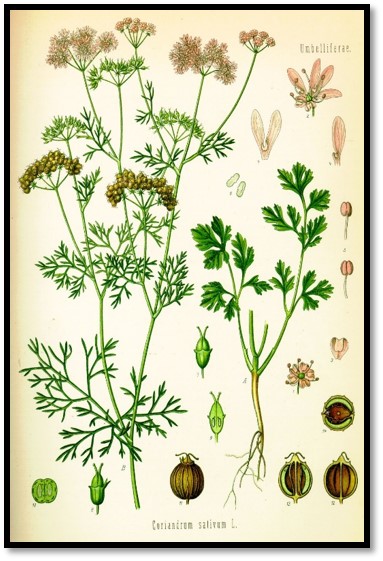 Coriander (Coriandrum sativum)
Coriander is a member of the Apiaceae family which originally comes from the Mediterranean. It is an annual plant preferring cooler conditions to grow in, often only having a short life during summer. The leaves grow on slender hollow stems and are often feathery and toothlike. It has umbels of tiny white flowers. producing small, round, hollow, yellow-brown seeds, with longitudinal strips.
Properties
Seed and leaf: anti-bacterial, anti-diabetic, anti-fungal, anti-inflammatory, anti-microbial, anti-rheumatic – external use, anti-spasmodic (stomach cramps), anxiolytic, carminative, digestant – and stimulates the appetite, diuretic, expectorant, stimulant. 5)
Leaf: mobilizes heavy metals from the brain and central nervous system. 6)
Treatment
Use Coriander in smoothies, or in your cooking. If removing heavy metals important to eat coriander consistently and raw over 3-5 days. You could make into a pesto. If you don’t like the taste make into capsules.
Tea can be made 1 tspn leaves / seeds or 2 teaspoon fresh, per cup of water, simmered for 20 minutes three times a day.