
Savoury
Common Names
Bean herb, Pepper herb.
Family: Lamiaceae
Description
This herb was introduced to England by the Romans and has been used for over 2000 years on a culinary and medicinal basis. It has a pungent and spicy taste, the Saxon’s named it Savoury. It’s Latin name Satureja has its origin in the word Satyr – which is also the mythical half man half goat, the herb is reputed to be his.
Winter savoury
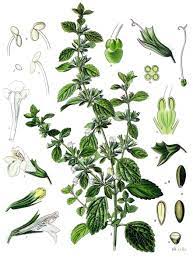
Satureja montana: Low shrubby perennial, liking a well drained soil and sunshine. It needs regular watering in warmer months. It likes a sheltered spot for cold weather and will grow well in containers. It has woody stems with small dark leaves. In summer it produces tiny white flowers that grow upwards. These tips can be cut and stored for winter use. Propagation is by means of cuttings and gathered summer seeds. By it’s nature winter savoury’s spreading stems will root where they touch the soil, these can be cut off and potted on.
Summer savoury
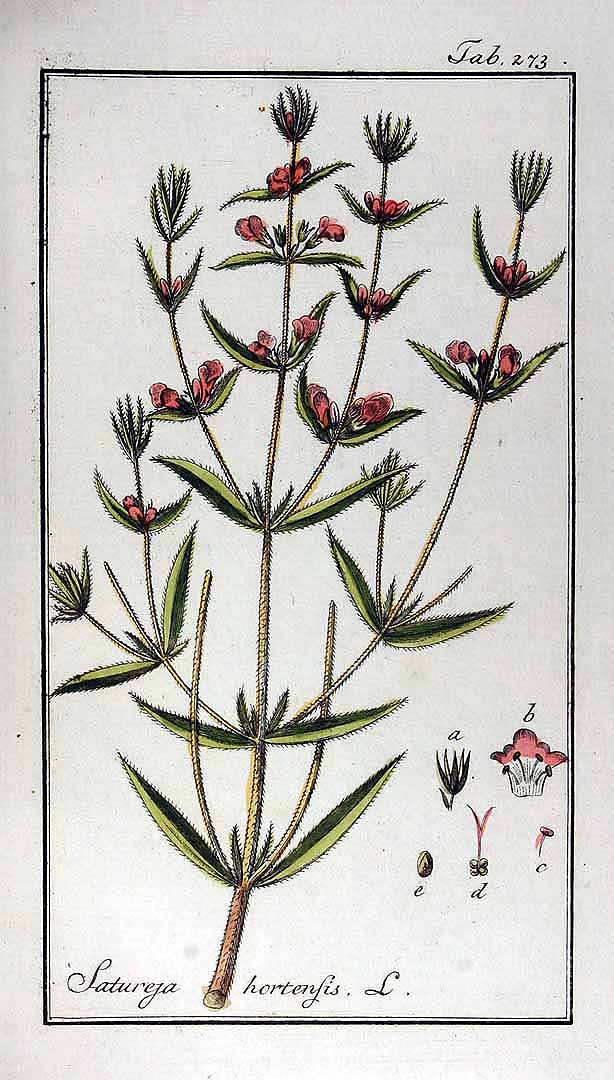
Satureja hortens is an annual, this plant grows more upright with less foliage but larger leaves.
This plant needs a soil that is light and rich within full sun. This grows from seed in spring, these may be slow to germinate and may be soaked in hot water before planting. If the growing tips are nipped this will encourage bushing and a greater supply of tender young shoots. It produces small white flowers.
Creeping savoury
Satureja repanda: As indicated this savoury creeps making it a good plant for rockeries and ground cover. It also produces small lwhite flowers.
Properties & Actions
Antibiotic, antifungal, antiseptic, aphrodisiac, carminative, digestive aid. Contains essential oils thymol, cineole, carvarol.
Used to treat
Coughs, colds, sore throats, insect bites (topical application of leaves), for digestive problems it can be eaten with foods such as beans.
Cautions
Winter savoury is not be taken during pregnancy due to high thymol levels.
Culinary
• Has a Marjoram, Thyme like taste with a peppery flavour.
• Winter savoury needs to be added to a dish when cooking, not eaten raw.
• Can be made into a jelly, with grape juice.
• Can be preserved with frozen beans and peas – traditionally cooked with them.
• Used to flavour salami.
• Can be a “pick me up” tonic when added to beverages or wines.
Combines with thyme, rosemary, sage bay and marjoram - as well as being one of five “Herbes de Provence” (savoury oregano, thyme, rosemary and marjoram). Flavours chicken, fish and meat well, along with vegetables, especially the brassica family utilising it’s digestive aid qualities.
© Vitae Essentia 2026